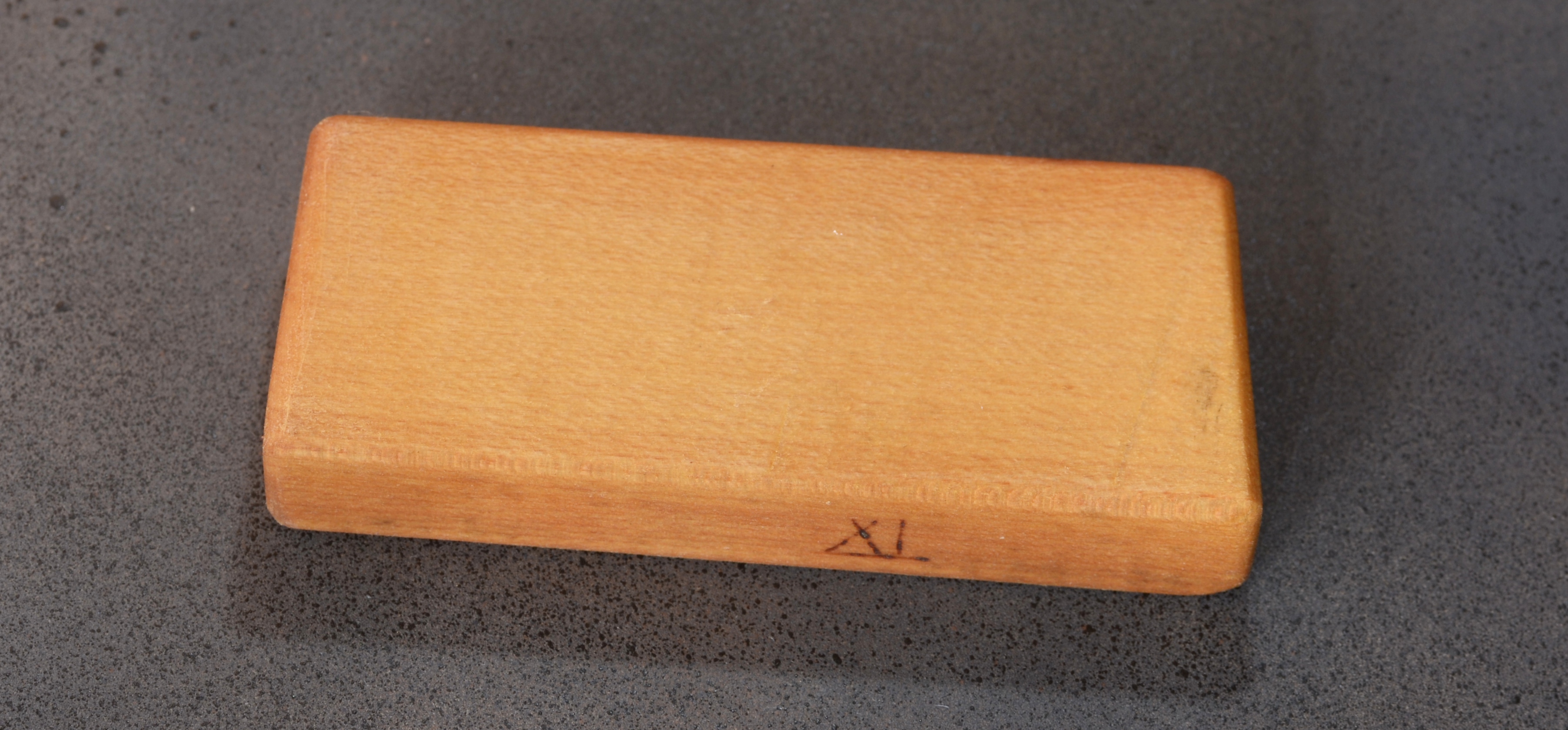
Canada has some of the most productive hardwood forests in the world. Sugar maple stands are concentrated in Ontario, Quebec, and New Brunswick; black walnut grows in southern Ontario in commercially useful quantities; white oak is found across the Great Lakes watershed; yellow birch is widespread from the Maritimes to Manitoba. All four are regularly available from Canadian sawyers and lumber dealers, and all four behave distinctly at the bench. Understanding those differences — particularly grain structure, movement characteristics, and how the species responds to hand tools — reduces waste and improves results.
Sugar maple (Acer saccharum)
Sugar maple is Canada's most commercially significant hardwood. It is the species behind most Canadian maple syrup production and, in woodworking, the dominant material for flooring, butcher blocks, and hard-use furniture surfaces. The Janka hardness of about 1,450 lbf (6,400 N) places it near the top of North American temperate hardwoods — harder than white oak, substantially harder than black walnut.
At the bench
Sugar maple cuts cleanly with sharp tools but quickly dulls them. A freshly honed plane iron cuts without tearout on straight-grained stock; once the iron dulls, even slightly, the surface becomes fuzzy rather than polished. This makes it a useful species for testing whether your sharpening is actually sharp enough — maple does not forgive marginal edges the way softer woods do.
Figured maple — bird's eye, curly (tiger), and quilted — presents a challenge because the grain direction reverses constantly across the surface. Planing interlocked grain requires a very high cutting angle (back bevel on the iron or a bevel-up plane set steep) and very light cuts. A card scraper is often a more practical choice for figured maple than a plane.
Movement and moisture
Sugar maple moves significantly with moisture changes. Tangential shrinkage from green to 6% moisture content is approximately 9.9%, radial shrinkage about 4.8%. Quartersawn maple moves roughly half as much as flatsawn across its width, which matters for wide panels, table tops, and drawer bottoms in a Canadian climate where indoor humidity can vary from 20% in February to 60% in August.
Finishing
Maple is notorious for blotching with oil-based stains because of irregular density in the end grain. Gel stains reduce blotching by limiting penetration depth. A wash coat of shellac before staining also helps. For a natural look — which maple often looks best at — an oil-varnish blend, pure tung oil, or a hard wax oil gives a low-sheen result that shows the wood's natural colour without the blotching risk of pigmented stains.
Black walnut (Juglans nigra)
Black walnut is the most valued furniture wood grown in Canada. Southern Ontario has the northernmost commercially productive stands. The heartwood — a rich chocolate brown with purple and grey undertones — develops its colour from juglone, a compound also present in the leaves and hull. Sapwood is pale cream and is considered undesirable in most furniture applications; most millwork removes it.
At the bench
Walnut is remarkably easy to work. It cuts cleanly with both hand and power tools, holds crisp detail in carving and joinery, and does not dull edges quickly despite its medium-high density. A sharp No. 4 plane produces a glassy surface on straight-grained stock with no special technique. Even interlocked or figured walnut — crotch figure, feather crotch, burl — responds well to careful planing because the grain, while irregular, is rarely as abruptly reversing as curly maple.
Walnut glues reliably with PVA and urea-formaldehyde adhesives. The juglone content does not appear to interfere with modern adhesives, though older references to glue failure with walnut are sometimes cited. Clean gluing surfaces — freshly jointed or planed rather than sanded — produce stronger joints in any species, walnut included.
Movement and moisture
Black walnut is dimensionally stable compared to maple and oak. Tangential shrinkage from green is about 7.8%, radial about 5.5%. In practice walnut furniture handles Canadian seasonal humidity without the dramatic movement that demands generous gaps and floating panels in maple or oak work — though those design considerations remain good practice regardless of species.

White oak (Quercus alba)
White oak and red oak are both Canadian species, but they behave differently enough at the bench that treating them as interchangeable is a mistake. White oak has tyloses — cellular plugs — in its vessels, which make it nearly impermeable to liquids. That is why white oak is used for whiskey barrels. Red oak lacks tyloses and is permeable, which limits its use for anything in prolonged contact with water or food. For furniture, both work, but white oak's ray figure — the prominent silver fleck visible on quartersawn surfaces — is more pronounced and more valued.
At the bench
White oak is hard (1,360 lbf Janka) and has a coarse, open grain. Planing end grain requires sharp tools and a skewed cut to avoid tearing the cell walls at the surface. Edge grain planes well with a sharp iron; the ray cells, which run perpendicular to the rings, can occasionally lift if the iron angle is too low for the grain direction. A 45-degree standard pitch is usually adequate; difficult pieces may need a higher-angle iron or a scraper for the final pass.
Joinery in oak responds well to traditional mortise-and-tenon work. Drawbored mortise-and-tenon joints — where a slightly offset hole through the tenon is pulled into alignment by a tapered peg — are particularly suited to oak because the wood is hard enough to transfer the tension of the peg without crushing.
Quartersawing
Quartersawn white oak is a distinct material aesthetically. The rays — visible as irregular silver streaks or "fleck" — become the dominant surface feature. Quartersawn boards also move less in width than flatsawn, which benefits table tops and panels. The challenge is that quartersawing wastes more material and produces narrower boards from a given log. Most Canadian lumber yards carry quartersawn white oak on request or as a standard line; it commands a price premium of roughly 30–50% over flatsawn in the current market.
Yellow birch (Betula alleghaniensis)
Yellow birch is the most widely distributed hardwood in Canada, found from Newfoundland to Manitoba. It is the commercial hardwood of the boreal transition zone — growing at elevations and latitudes where sugar maple is absent or marginal. Historically it was the primary material for furniture manufactured in Quebec and the Maritimes. In workability and appearance it resembles hard maple: a pale, close-grained hardwood with a slight reddish tint in the heartwood.
At the bench
Yellow birch planes similarly to sugar maple — it is hard, it dulls edges quickly, and it requires a sharp iron for a clean surface. Grain tends to be straighter than maple, which makes it slightly more forgiving. Birch also turns well on a lathe, which is one reason it was widely used for chair legs and spindles in Canadian craft traditions.
Birch veneer and plywood are more common than solid birch in most contemporary Canadian shops. Baltic birch plywood — a product of European yellow birch — is the cabinet shop standard for drawer boxes and shop furniture because of its void-free core and consistent thickness. It machines and finishes well, though the raw edge requires filling or banding for a finished appearance.
Species comparison at a glance
| Species | Janka hardness | Workability | Movement (T/R) | Typical use |
|---|---|---|---|---|
| Sugar maple | 1,450 lbf | Moderate — dulls tools | 9.9% / 4.8% | Flooring, benchtops, hard-use furniture |
| Black walnut | 1,010 lbf | Excellent — easy to work | 7.8% / 5.5% | Fine furniture, carving, veneers |
| White oak | 1,360 lbf | Good — coarse grain | 10.5% / 5.6% | Tables, chairs, barrels, flooring |
| Yellow birch | 1,260 lbf | Moderate — similar to maple | 9.5% / 7.3% | Cabinets, chairs, turned work, plywood |
Sourcing note: The Natural Resources Canada forest products division maintains data on Canadian timber species, including volume by region. For bench-ready lumber, hardwood sawyers in Ontario's Waterloo and Grey-Bruce regions, as well as dealers across the lower St. Lawrence valley, regularly stock all four species discussed here. The National Hardwood Lumber Association grading rules apply to most Canadian hardwood sold through commercial channels.
Identifying species from a board
End grain is the most reliable identification point. Maple has fine, evenly distributed pores and a fine, even texture. Walnut has semi-ring-porous structure — larger pores in the early wood, finer in the late wood — and a distinctive chocolate colour. Oak has large, distinct ring-porous vessels visible to the naked eye and broad rays visible as light-coloured lines running perpendicular to the rings. Birch resembles maple closely; the slight reddish heartwood tone and the occasional visible lenticel pattern on the face grain help distinguish them.
Smell is also useful for fresh-cut or freshly planed stock. Walnut has a mild, distinctive earthy note. Maple and birch are largely odourless. White oak has a faint tannic smell, particularly noticeable when cutting into the heartwood.